 blog
Which Payment Gateway Is Best for HK Businesses in 2026?
Last Updated: November 21, 2026
Quick Summary
The best payment gateway hk merchants can choose is the one that settles reliably, supports the wallets your customers actually carry, and prices cross-border sales honestly. Judge gateways on acceptance, total cost, settlement behaviour, and integration quality rather than the longest feature list. There is no single winner, only the right fit for your scenario.
- Hong Kong's card payments market was forecast to reach US$175 billion in 2026, per GlobalData.
- Your checkout should support cards, FPS, AlipayHK, WeChat Pay HK, PayMe, Octopus, and bank transfers.
- Compare providers on processing, FX spread, setup, monthly, payout, refund, and chargeback fees.
- Most acquirers settle local card transactions on a T+1 to T+3 business-day cycle.
- Run a refund, partial refund, and failed payment in the sandbox before go-live.
Table of Contents
- What the Best Payment Gateway for HK Businesses Must Get Right
- Hong Kong Online Payment Methods Your Checkout Has to Support
- Hong Kong Payment Gateway Fees: Reading the Real Total Cost
- Multi-Currency Payment Gateway Hong Kong: FX Spreads and Settlement
- E-Commerce Payment Gateway Hong Kong: Integration and Operations
- Matching the Gateway to Your Business Scenario
- Start Your mPay Integration and Test the Checkout Yourself
- Frequently Asked Questions
What the Best Payment Gateway for HK Businesses Must Get Right
Hong Kong's card payments market was forecast to reach US$175 billion in 2026, with 7.6% growth over 2021-2025, according to GlobalData's market forecast. That volume sits behind a simple truth: the best payment gateway hk merchants can choose is not the one with the longest feature list. It is the one that settles reliably, supports the wallets your customers actually carry, and prices cross-border sales honestly. At mPay, we build checkout infrastructure for local merchants, so we judge gateways on four things: acceptance, total cost, settlement behaviour, and integration quality. Below, we break down each, with the numbers that matter.
A payment gateway is the system that authorizes and routes a customer's payment from your checkout or terminal to your acquiring bank, then reports the result back to your store. It is plumbing, but plumbing decides whether a sale completes.
Hong Kong Online Payment Methods Your Checkout Has to Support
Card acceptance alone under-serves local buyers. Aspire's guide to local payment support highlights FPS and AlipayHK as methods to weigh, while Statrys' payment options overview lists PayMe, AlipayHK, WeChat Pay HK, and Octopus alongside cards. A checkout that skips these loses baskets at the final tap.
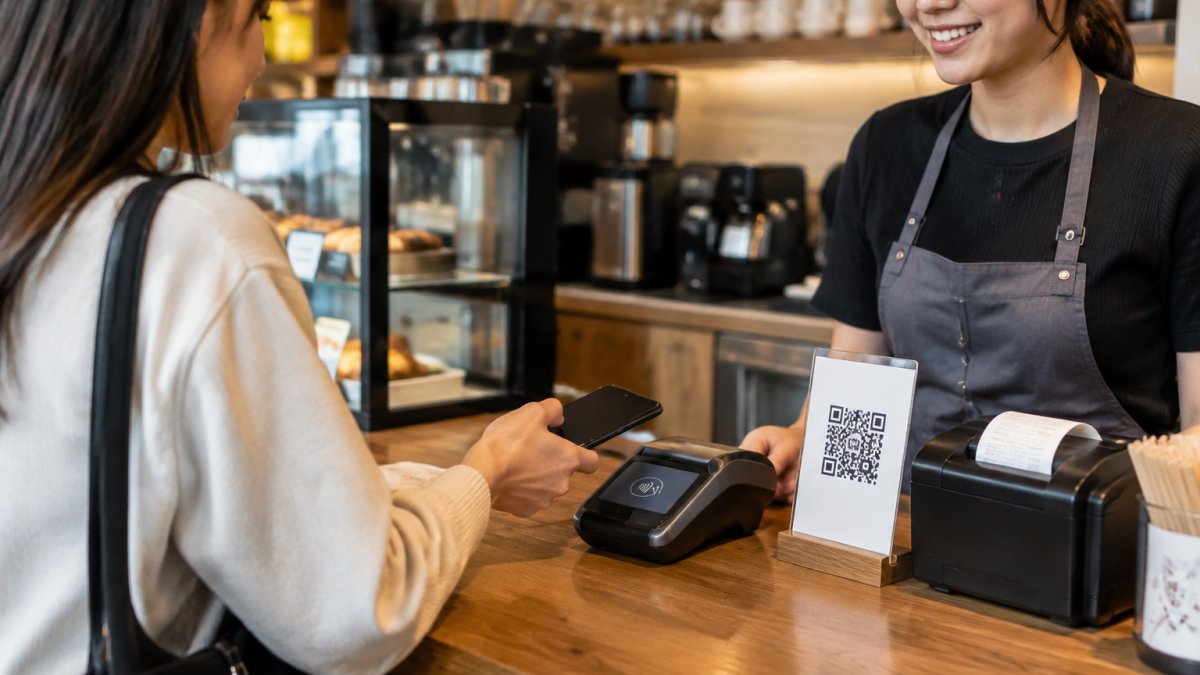
Your shortlist should cover:
- Credit and debit cards for domestic and international buyers
- FPS for instant bank transfers without card fees
- Digital wallets including AlipayHK, WeChat Pay HK, and PayMe
- Octopus for high-frequency, low-value retail and transport
- Bank transfers for invoiced B2B work
The practical test: open your own checkout on a phone and try to pay with each method. If a wallet is missing, that is a conversion leak, not a nice-to-have.
Hong Kong Payment Gateway Fees: Reading the Real Total Cost
Advertised rates can hide the real bill. A gateway's total cost is the processing fee plus FX spread plus setup, monthly, payout, refund, and chargeback charges. Compare providers on all six lines, not the headline percentage, and model a real month of transactions rather than trusting a rate card.
| Cost line | What it covers | What to ask | Typical market range to sanity-check against |
|---|---|---|---|
| Processing fee | Per-transaction percentage | Does it change by card type, wallet, or channel? | Local card rates commonly sit in the low-to-mid 2% range for small merchants; wallet and FPS rates are often lower |
| FX spread | Markup on currency conversion | What is the spread versus mid-market, and is it fixed or floating? | Spreads of roughly 0.5%-2% above mid-market are common; a "free" processing rate is usually recovered here |
| Setup and monthly | Account and platform charges | Waived at volume? | Often waived for established merchants, charged for startups and high-risk categories |
| Payout fee | Moving settled funds to your bank | Per transfer or per batch? | Frequently free to a local bank account, charged for cross-border payouts |
| Refund fee | Reversing a transaction | Is the original processing fee returned? | Many providers keep the original fee and add a small fixed refund charge |
| Chargeback fee | Dispute handling | Fixed or percentage-based? | A fixed fee per dispute is the norm; percentage-based chargeback fees are a red flag |
The three lines merchants forget.
- Refund economics. If you refund 5% of orders and the original processing fee is not returned, your effective rate rises by roughly 5% of your processing cost. For high-return categories such as fashion, that is a real margin line, not a rounding error.
- Chargeback cost. A fixed chargeback fee plus the lost sale plus the operational time to compile evidence usually costs far more than the fee itself. Ask how evidence is submitted and whether there is a dispute portal.
- Payout and reserve cost. A rolling reserve of, say, 5% held for 90-180 days is a financing cost. Price it at your borrowing rate before you call one gateway cheaper than another.
Watch out: a gateway quoting a low processing rate can recover margin through a wide FX spread on USD sales, so build a one-page model with your actual card/wallet/cross-border mix, your refund rate, and your expected chargeback rate before signing, and ask each provider to confirm every line in writing, including whether the FX spread is fixed or floating.
Multi-Currency Payment Gateway Hong Kong: FX Spreads and Settlement
Cross-border sales turn FX into a margin line, and settlement timing turns it into a cash-flow line. Airwallex's gateway description notes acceptance of Visa, Mastercard, Alipay, and WeChat, though published transaction volumes are not disclosed. The question is not whether a gateway accepts multiple currencies. It is what conversion costs you, when money lands, and what can delay it.
Settlement windows you should expect. Most acquirers settle local card transactions on a T+1 to T+3 business-day cycle, with wallets and FPS often faster and cross-border card sales slower. The practical details that decide your cash flow:
- Cut-off times. A transaction captured after the daily cut-off usually rolls to the next business day. Ask for the exact cut-off in your contract.
- Weekends and public holidays. Settlement generally pauses on non-business days, so a Friday evening sale may not fund until midweek. Map this against your payroll and supplier dates.
- Currency of settlement. Settling in HKD suits local costs; settling in USD suits supplier payments. Converting twice, once at the gateway, once at your bank, is a common and avoidable cost.
- Payout batching. Daily, weekly, and on-demand payouts carry different fees and different reliability. On-demand payouts are convenient but often priced per transfer.
Reserves and holds. New merchants and higher-risk categories frequently face a rolling reserve, commonly a percentage of each transaction held for a defined period, or a fixed reserve amount. Ask four questions: what percentage, held for how long, released on what schedule, and can it be reduced after a clean trading history? A reserve is not automatically a bad deal, but it is a cost, and it should be priced into any comparison.
FX spreads. Ask whether the spread is fixed or floating and what it is measured against. A fixed spread is easier to forecast; a floating spread can widen in volatile periods. Request the spread in writing and compare it to the mid-market rate on the same day, not to another provider's headline rate.
Payout reliability. Beyond timing, ask what happens when a payout fails, wrong bank details, a compliance hold, a closed account, and who you call. A gateway that pays out in two days but leaves you without a named contact during a failed payout is worse than one that pays in three days with a clear escalation path.
Watch out: a gateway that quotes fast settlement but applies a rolling reserve and a wide FX spread can leave you with less cash, later, than a slower-settling competitor, model the reserve release schedule and the spread together before you compare settlement speeds.
E-Commerce Payment Gateway Hong Kong: Integration and Operations
Integration quality decides your launch date. A payment gateway hk teams can integrate quickly, with clean APIs, documented SDKs, and maintained plugins for your store platform, gets you live in days. One with thin documentation costs you engineering weeks. mPay's one-stop platform covers e-commerce plugins, multi-currency acceptance, and SoftPOS on Android smartphones.
Operationally, check these points before committing:
- API and SDK documentation with sandbox access for testing
- Recurring payments and subscriptions if you bill repeatedly
- Refunds and chargeback workflows your finance team can run without support tickets
- PCI DSS compliance and how card data is handled and stored
A common mistake is testing only the happy path. Run a refund, a partial refund, and a failed payment in the sandbox before go-live.
Matching the Gateway to Your Business Scenario
There is no single winner, only the right fit. Use this framework:
| Your scenario | Priority | What to look for |
|---|---|---|
| Small online shop | Local wallets | Plugins supporting Octopus, PayMe, FPS |
| Restaurant chain with kiosks | Peak throughput | Stable POS and kiosk integration under load |
| Enterprise with multi-channel | API depth | Documented SDKs, security, multi-channel reporting |
| Professional services firm | Reconciliation | E-invoicing and automated matching |
| Logistics and transport | High-volume collection | Reliable payouts and batch settlement |
Watch out: migrating from a bank-linked processor mid-quarter can leave two systems to reconcile. Plan a clean cutover date and export your transaction history first.
Start Your mPay Integration and Test the Checkout Yourself
Choosing a gateway on a spec sheet is guesswork. The only proof is a live test: run a real transaction, a refund, and a cross-border sale, then check the settlement date and the FX line on your statement. mPay supports multi-currency transactions across online, in-store, and self-service channels, with e-invoicing and SoftPOS on Android. Get started with mPay and test the checkout yourself before you commit.
Frequently Asked Questions
Which payment gateway supports FPS and digital wallets for a Hong Kong business?
Look for a provider that lists FPS, AlipayHK, WeChat Pay HK, PayMe and Octopus alongside Visa and Mastercard acceptance, rather than card-only processing. Ask whether a provider covers local wallets and card payments through one merchant account, so you avoid opening a separate account for each method. Ask for the full supported-method list in writing before you sign, and confirm which methods work on your e-commerce plugin versus in-store terminals.
How much do payment gateways charge in Hong Kong?
Charges usually combine a percentage of each transaction, a fixed per-transaction amount, and a foreign exchange spread on cross-border sales. Card payments generally cost more than FPS or wallet transfers. Pricing depends on quantity, dates, and delivery, so request a written quote from mPay that separates processing fees, FX margin and any setup or monthly charges before comparing providers.
Can a Hong Kong business accept payments in multiple currencies?
Yes. A multi-currency payment gateway lets you price in HKD, USD and other currencies, then settle into the currency you choose. The detail that decides your real cost is the FX spread applied at conversion, not the headline processing rate. Ask each provider for the spread in basis points, whether you can hold balances in foreign currency, and how long settlement to your bank takes.
How do I integrate a payment gateway with an e-commerce website?
Most platforms offer a plugin for common shopping carts, plus an API and SDK for custom builds. Start with a sandbox account, run test transactions for each local payment method, and check that refunds and chargebacks flow back into your order system. For multi-channel setups, confirm the API documentation covers online, in-store and self-service channels, and ask about webhook reliability before peak season.